Monday, May 9, 2011

The New Farmville Reality Project


The way things have unfolded in 2011, the Farmville Reality Project will not produce near the bounty of fruits and vegetables it did in 2010. As a matter a fact, the location of the project has moved to a place known as the "Buckle". The official name of our new hometown is Arbuckle. It's a sleepy little town along I-5. The main crop in this area are almonds. As you can see in the pictures, the new Farmville has almond trees. They have not been well tended the past several years and there are only so many almonds a crew can eat in a year, so these trees will be removed. In their place will be a multitude of trees, vines, and open garden. The new place is two acres total, and I'm willing to bet this soon-to-be-former orchard is about an acre. At this time, no real detailed plan has emerged on what will go where. Here is a list of things under discussion for various reasons.


  • Boysenberries- Lynda has promised to make plenty of pies when the berries are plentiful.


  • Winegrapes- No further explanation needed.


  • Peaches, Plums, Nectarines- If you've ever had the opportunity to eat these fully tree-ripened, you too would make it your life's mission to have these very close to your back porch.


  • Olives- Home cured olives are always great to have around. We also made some olive oil last year and it turned out pretty good.


  • Mandarins- The absolute best mandarin is the Owari Satsuma. They have the perfect balance of acid and sugar, plus the skins almost peel themselves.


  • Cherries- Although they can be a chore to pick because of how small they are, Bing cherries are a real treat.


  • Apples- Since they are so versatile in the kitchen, there will be a few different varieties so we can cook with them and eat right off the tree.


  • All of the same great things we grew in 2010, plus anything else that might come to mind.
How's that for maintaining maximum flexibility for the new location? I'm thinking with an acre to play with, future meals are going to be filled with ample fresh produce straight from the garden. As we get the old almond trees cleared and start planting new trees, I'm sure plenty of other things not listed above will get thrown into the mix.


For now though, the immediate chore was to cut the four foot tall weeds down so the fire department won't come out and taze me til my ears bleed. Because we tend to make things up as we go along, the rig used was the bobcat in the first picture with a hydraulic driven, front mounted mower. I called around to various rental places and this appears to be a popular time of the year to get weeds chopped down. Most tractors with traditional rear mounted mowers were already reserved. While talking to one outfit, they guy mentioned this rig and said it doesn't leave a finely mowed surface behind but it will chop down tall weeds in tight places like nobody's business. After getting the hang of driving this thing, I have to say he was spot on. I was able to turn on a dime and poke the mower between the trees, under low hanging branches and even within inches of the barns. The controls were a couple of levers that are pretty much like joysticks on a video game. The tractor moves according to if the levers are pushed or pulled and speed depends on how far forward or back they go. Same with steering. It turns left if the right lever is pushed and the left lever is pulled because the wheels on one side will move in the opposite direction than the other side. Since it is what is known as hydrostatic driven instead of direct drive, you can stop and reverse course instantly without shifting a transmission. The two foot pedals control the height and angle of the mower deck. After ten minutes of getting used to operating it (and a few broken branches), I was able to flat out slaughter my most despised enemy, the weeds. It was noisy, bouncy, dusty work. For a guy like me that actually likes operating machines instead of computer keypads, it was very satisfying.


I took a picture of one of the weed-infested areas before mowing and then the after shot so you can see what a mess this old orchard had become. It's exciting to imagine the possibilities for creating the perfect home orchard and vineyard. At this time, the olives will likely be trellised to make picking them easier but the grapes might not be so the canopy can better protect them from the scorching sun. I guess we have plenty of research and homework to do as we develop this new location. Sometimes, that is almost as much fun as enjoying the proverbial fruits of your labor.

Monday, March 28, 2011

Still Cooking with Stuff from the Garden


All right, I realize it's been awhile since the last post. The single biggest reason is this time of year is not the best for working out in the garden. However, that does not mean the garden doesn't provide great material to work with in creating good meals. The pictures with this post are of tonight's dinner. As you can see, it fit on one standard size dinner plate and in a soup bowl. Don't let this simplicity fool you into thinking we don't eat well around Farmville these days. Quite the opposite, actually. First let's describe what this meal was and then we'll describe the ingredients, and as usual, my two cents on how those ingredients found their way to my pan tonight.


The main dish, if you have to have one, was a variation of a San Francisco specialty called "Joe's Special". For those that have never had it, use Google to find out what it is. Nothing too fancy, but it hits the spot when you're hungry. Since I like to use what I have on hand, this was made up of Italian Sausage, mushrooms, onions, garlic, brown eggs, Swiss chard, and cheddar cheese. The soup in the bowl is a butternut, wild rice, and smoked sausage soup. The garnish you see on the plate is garlic chives and spearmint. We'll get into that later, if I remember.

For the Joe's Special knock-off, the tie-in to the garden and other things I tend to discuss in this blog are this. The brown eggs are symbolic of another time back in the 1970s when Lynda and I had the dubious honor off going out to collect the eggs from her dad's chickens. He got this batch of Rhode Island Reds with the belief they were all going to be laying hens. As time went on, this pretty much was the case with the glaring exception of this one rooster. Apparently, those that sorted this batch by gender made a slight error on one of them. As he got bigger, he did the usual rooster stuff and tried to kill anything he thought should be killed because he thought so. Since Lynda was the one that did most of the chores at that point in time, she had to face this crazy rooster everytime she went to gather eggs from the hens that were laying by that time. Being the crazy rooster he was, he would charge at her and attack with full rooster force. One day she told me about this situation and me, being the protective kind of guy I am, decided to go out and take care of the egg gathering myself. This rooster did his usual routine and attacked, but this time, the person he attacked had a 2 by 4 in his hands. Being a former baseball player in junior high school, let's just say I hit at least a triple that day. It didn't do much much good though, because that stupid rooster kept on doing his psycho attack routine way after I batted him into the outfield. OK, back to the eggs. Those eggs from the Rhode Island Red hens were the best I ever had. They would have free run of the garden to peck at things and Lynda and I would go to Florin Feed and get a feed mix that was formulated for laying hens. The eggs we would gather were very good. The yolks were so intensely yellow and the taste was very rich. In the years since then, I have never had comparable eggs and I look forward to being able to raise some hens again and have a steady supply of great tasting eggs.


The soup was made with Farmville butternut squash and highlights why winter squash should be in everyone's garden. What other vegetable can you harvest in November and still have around to cook with in March of the following year? All I did to make sure these would keep this long is made sure they were clean and stored in a basket with good air flow. I put this basket in the corner of the shed and have been using squash from it all winter long. The wild rice in the soup is from a farm up in Fall River. Fall River is in the northeast part of California and right in the middle of some of the best fly fishing anywhere. It was nice to use an ingredient from that area and think about next summer, chasing trout in some of my favorite creeks around there. The smoked sausage was plain old store bought, but in the future, the plan is to get back into sausage making. Who knows, once we are settled in the new place, maybe I'll raise a hog or two each year and make sausage from my own pork. I just have to keep Lynda from naming them.


OK, I did remember to go back and talk about the spearmint and garlic chives used as a plate garnish. I stumbled on both of them while I was getting the Swiss chard. Since the plan is to move later this spring, it didn't make much sense to plant anything after the fall garden wound down. This pretty much means the majority of the garden is a jungle of weeds. Under these weeds were very healthy clumps of spearmint and chives. I was feeling a bit lazy and decided to wash and use them for garnish rather than chop and sprinkle over the food. Both would have added some interesting flavors to the dishes. It did show just how hardy some herbs can be and they are definitely going to be included in the next garden project.

Sunday, January 2, 2011

Reflections on 2010


The pictures above capture the Farmville Reality Project at three different points of time. There is about two months in between each shot. The first picture is just before the ground was worked prior to planting. I really should have taken a picture a couple weeks before this one was taken to show how ungarden like this site was. I had to spray the waist high weeds two times to knock them down enough to see where all the trash was to pick up. The boy and I spent close to two weeks cleaning things up between the too often spring rains. Even after disking, rototilling, shoveling, and finally raking the seedbeds, we continued to find odd items all season long. These items ranged from old beer cans to horseshoes.

The picture in the middle shows how much bare dirt there was between the various things growing. I bring this up for a couple reasons. One, by the end of the season, there wasn't much bare dirt to navigate around on while picking things. It always amazes me how much corn, melons and tomatoes grow in just a few months time. The second reason I bring this up is to somehow burn into my brain to leave more space between some of these things when planting. I tend to crowd things a bit too much when planting. I'm always trying to get the most from whatever inputs are being used, but I did learn a long time ago that crowding plants that don't want to be crowded doesn't turn out very well. The first time we grew watermelons commercially, we made this mistake. We did end up with roughly twice as many melons per acre than the traditional spacing would have yielded. The punchline was the biggest melon was only about twelve pounds, which for the variety we grew, was not very good. It was a seeded variety and at ten to twelve pounds, each melon had roughly two or three small bites in the middle before you had to work around the seeds. The next season we planted on a wider spacing and had twenty two to thirty pound melons, which sold much better than the prior year's crop. The one major spacing change I'll make next year will be for the heirloom tomatoes. Their plant type is much larger than some of the new hybrids and they need the extra room to spread their branches out. It looked like I crowded them to the point that their branches became too intertwined and did not allow enough sun to hit the plants. I think this reduced the number of blossoms and subsequently, the amount of tomatoes. It also allowed the stinkbugs to build massive subdivisions of stinkbug tract homes deep inside the canopy. This population explosion meant quite a bit of the tomatoes were damaged. These enemies of Farmville feed on the fruit and leave yellow spots on the surface of the fruit. Just under the skin, the yellow spots turn into white blotches that make the fruit taste bitter. If there's not too much damage, you can cut the bad parts out, but if there's a lot, then it's not worth it. For the sake of my mental health, I need to move on now. I can easily lose myself in the never-ending war on stinkbugs and spend every waking moment developing strategies to try and prevail over them.

The third picture above shows how it all comes together with enough sunshine and water. Although the three pictures were not taken from the exact same vantage point, with the old, dead oak tree in the background, you can hopefully get a good sense of perspective on how things went from a weed patch to having eight foot tall corn in just four months time.


The two pictures above have special significance in the context of reflecting back on 2010. The shot of the young melon plants with the morning sun bringing out the glow in the leaves was taken in early June. When this picture was taken, I had the good fortune to reunite with someone that shares this passion for growing a garden that feeds one's self in many ways and on many different levels. Beyond the countless meals that were amazing simply because the ingredients were freshly picked, the garden brought much more to the table. In our small circle of folks, it became a center of many conversations. These ranged from people asking when this or that might be ripe to planning future meals based on harvesting things we were literally planting seeds for at that moment. The picture of the sun going down behind the garden hopefully captures the simple calmness of finishing the day taking care of garden chores. On this evening, it was about watering the thirsty plants. We spent many evenings watching the sun set while doing simple chores like this. I could go on for pages describing the many things you see when you're out at sunset in a garden, but it still wouldn't scratch the surface. We saw everything from intricate spider webs getting the finishing touches to an owl setting up its perch in the dead oak tree. Actually the owl came along a bit past sunset that evening, but it still counts.

All in all, 2010 was an amazing year. The plan is keep the Farmville Reality Project going strong in 2011 and every year into the future. It's very likely the location will change but the concept will stay the same. I plan to continue posting blog updates in 2011, much the same as was done in 2010. The big wild card is that we will be embarking upon a new adventure that will become material for another blog. Then again, it might be the right time to roll everything together into one site with sections for each "adventure". Stay tuned and we'll see where it all takes us...

Not so Random Stuff

It's been just over two months since the last post. To make up for this long gap, there will be two posts today. Truth be told, the reason there are two posts is the site only allows 8 MB of pictures to be uploaded per post and there just happened to be more than 8 MB of pictures I wanted to comment on. I titled this post "Not so Random Stuff" for a reason. While these pictures and the accompanying comments are pretty random, overall it's not. Since two posts were made on the same day, as you can imagine, even in my ADHD world, there is a correlation. It is this; the fact that I'm sitting here commenting on pictures taken many months ago shows how the project became a focal point for bringing together many different aspects of 2010. It was fun to sort through the many pictures taken over the past several months and remember what was going on at the time they were taken. These particular ones stood out for various reasons, so I thought I would upload and comment on them.
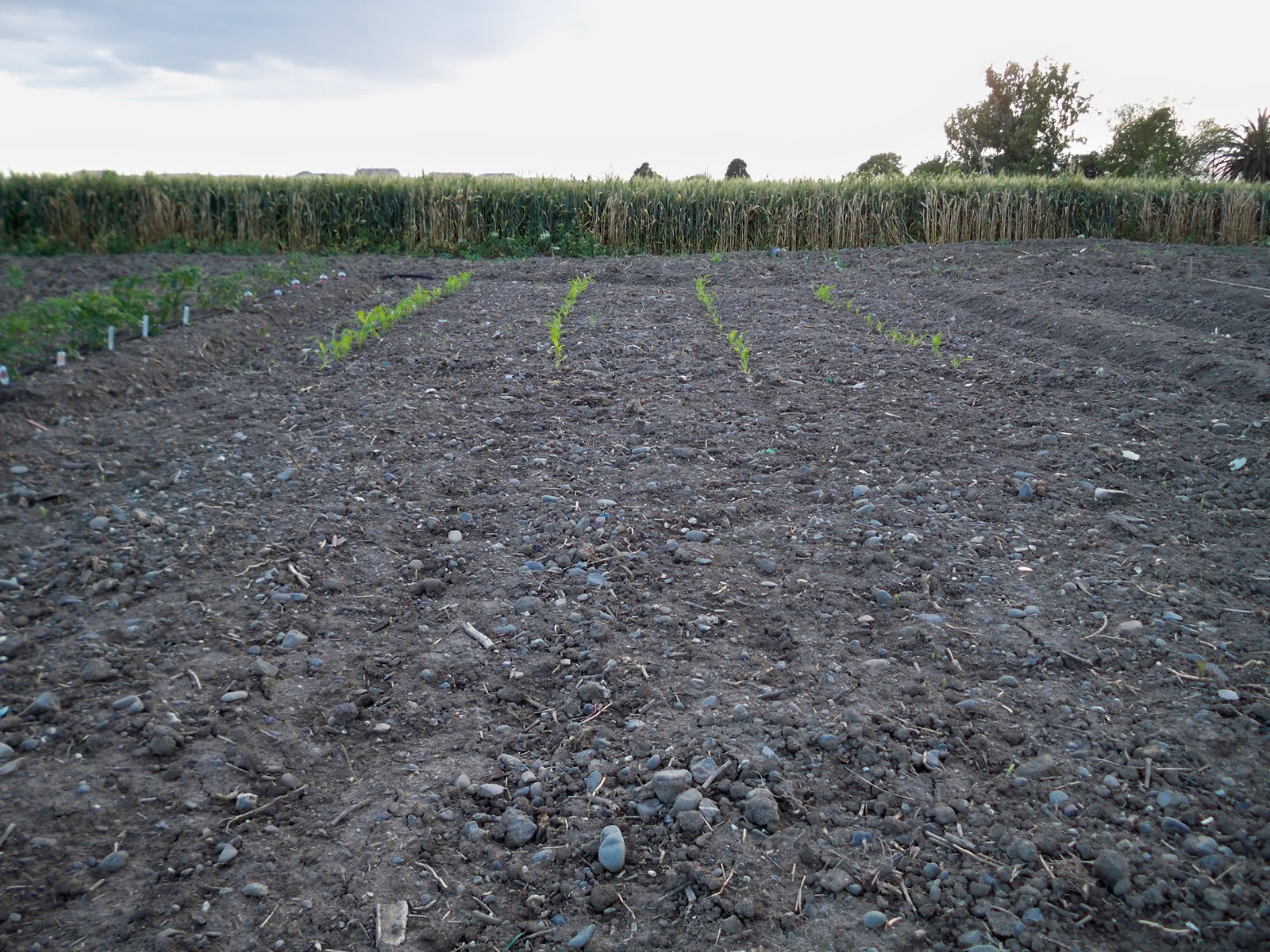
Here is a picture of the crooked rows of corn from back in April. I had mentioned in a post in May that they were crooked and would bother me until the next planting hid my crooked rows. I thought I would post it despite how the middle two rows curve to the right. It stood out this morning because I was looking at other pictures where the corn planted a few weeks after this was over eight feet tall. In the next blog post, you'll see pictures of the corn and this crooked stuff is invisible.
The picture of the basil is here because we can't wait until next summer when garden fresh basil will be just a few steps from the kitchen. Although we spent an entire afternoon making pesto for the freezer, it is long gone now. This showed us we need to make at least twice as much next year to get all the way through the winter. In 2011, the pesto making will have a neat twist to it. In early December 2010, Kevin Jr, Jessica H and I spent a rainy afternoon picking olives out by the UCD airport. This was part of an event that resulted in the olives being pressed into oil. Some of this oil has been set aside to be used for pesto making next summer. This will be the foundation for some truly great meals.
The sunflower picture is here to highlight an idea that is not necessarily exclusive to having a garden, but having one helps. The idea is the act of taking pictures sets you up to see some incredible things. The sun behind the sunflower with foraging bees is a prime example. Originally, my goal was to get a shot of the sunflowers in a row. As I looked at them, the bees' activity seemed interesting and they were foraging so intently, an up close shot without disturbing them was easy. Taking the pictures involved moving around to try different angles and one of them was this one. I encourage everyone to keep a camera handy and look for great shots. They're out there, you just have to look for them. Having a garden helps because it gets you outside, where in my opinion, the best shots are at.
This bucket of tomatoes is here because I was just recently reminded about them. As part of my important mission to keep Lynda from having to buy regular old run of the mill food stuff, I sent her home with some tomato puree. This tomato puree came from these tomatoes pictured. They were the Roma variety and in addition to making nice thick puree, they are great for pico de gallo. Now that I'm writing about them, I think I'll use some to make spaghetti sauce for dinner tonight.
The pumpkin pictured here was a, in the words of my daughter, ginormous one. It took RJ and I some serious cussing to carry it from the garden to the front porch for Halloween. Not to deprive Kevin Jr of the opportunity to talk like a sailor, he and I carried it from the front porch to the back porch where I cut it up to cook. This is no exaggeration when I say I cooked less than half of it and filled the freezer up with pumpkin. It has made its way into numerous pies, batches of cookies, a pot of soup, and a casserole. I have also given a few vacuumed packed bags away and there is still a butt load in the freezer. It is amazing how much comes from just one pumpkin. The personalized inscription was done at no extra charge. This was the first pumpkin Lynda and I grew together in over thirty years and it looks like we still have the magic touch.


Friday, October 22, 2010

The Fall Garden


As you can see from the various pictures, Farmville is still alive and kicking. It's been awhile since the last post and I can understand why you might come to the conclusion that everything was finished for the season. The truth of the matter is wine making has taken up a great deal of time, so posting updates fell a little behind. In between the batches of wine, I did manage to get a few things planted for the Fall garden. These were planted mostly in mid-September:
  • Celery
  • Broccoli
  • Cauliflower
  • Cabbage
  • Lettuce
  • Beets
  • Radishes
  • Peas
  • Bok Choy
  • Romanesco
  • Chard

These are all great things to have in the garden because they can be used in so many ways. Broccoli, cauliflower, and Romanesco can be steamed and served as a vegetable side dish with just about anything. They are also very good for soups and casseroles as well. Most of these vegetables can be used raw in salads or on vegetable platters or cooked with meats and starches. Those with the good fortune to have access to very fresh picked vegetables for salads know how much this adds to the dish. I find that using very fresh picked vegetables in cooked dishes also makes a big difference. The freshness contributes more concentrated flavor when compared to something picked a few days before, so you can go very light on seasoning and enjoy the true taste of the vegetables. Another advantage to having a garden full of vegetables to pick dinner ingredients from is you can customize according to what dish is being prepared. For instance, the small, secondary sprouts of broccoli are the best for stir frying. You can use a larger head cut up into smaller pieces, but being able to pick the small side shoots takes things to a higher level. I planted the beets for nostalgic reasons. They are very good when simply boiled and eaten fresh versus the canned version we are familiar with. Back in 1983, I was living in a small house on our headquarter farm. Next door to me (for context, next door was about a half a mile away) lived an old guy named Andy. He was very colorful and had a lot of good stories about the area. He had grown up there and remembered when this area of West Sacramento had not even been cleared of brush to plant crops. He was in his mid-eighties at that time, so was born just before the turn of the century. That particular fall, he decided to plant beets behind his house. He didn't like the beets at the grocery store and being on a fixed income, he always planted a big garden to feed his wife and him. For some reason, the beets flourished. Every single row he planted came up and grew like weeds. He and his wife could only eat so many beets and I think he gave so many to his friends and family that they got tired of eating them too. Every day when he saw me drive down my driveway, he would flag me down and ask if I needed some more beets. I always said yes and told him how great they tasted. That was the truth too. They were very good. I think he would actually pull a handful up when he saw me coming, and I would usually wash and cook them within an hour or so. When they're fresh like this, they don't need much seasoning. Just a pinch of salt and pepper. Be careful though, the juice leftover from boiling them will stain everything bright red. Years ago, beet juice was the red dye of choice for many things.

The other pictures show how some of the summer planted stuff looks in the fall. The peppers have all just about turned red. The jalapenos are actually milder when red. The tomatoes are much smaller in size and what green ones are left, take almost forever to ripen up. Good thing I have a freezer and pantry full of tomato products from last summer. The sunflowers are drying out but I think the birds will get more of the seeds than I will. That's OK. The pumpkins and winter squash have all ripened up and are ready to be picked.

It's been a very good year for Farmville. Just about everything cooked for dinner the past few months has had something from the garden as the key ingredient. When fruits and vegetables are the foundation of the meal, it tends to be healthier for you. Not 100% of the time (I do use things like bacon to flavor up dishes), but for the most part. That's all I shoot for anyway. As the fall planted vegetables mature, I'll get better about posting updates.


Tuesday, September 28, 2010

Are We Tired of Squash Yet?

Before we wander too deep into a philosophical discussion about squash, I'll answer the question from my perspective. Nope, not yet. As I poked around yesterday to see how things were doing in the heat wave, I found a yellow zucchini. This was a nice little treasure because that side of the garden hasn't been watered in a few weeks. Everything around this squash plant has been finished for the season, so it didn't make sense to drag the hose over there to water it. It is showing just how tough and strong it is by not only surviving this man-made drought, but also producing more of its kind. I "celebrated" this discovery by seasoning with salt, pepper, oregeno and olive oil. A few minutes on the grill and it was a very tasty partner to the nice NY steak known as "last night's dinner".

I'm seriously considering a new cause to champion and that is to educate the masses about the benefits of growing squash in their gardens. They are very easy to grow and produce an insane amount of food compared to how little effort the gardner needs to do for them. I know people get tired of eating squash a few weeks into the summer, but the solution is to mix up how it is prepared. Here is a list of some the ways zucchini was used this past summer here at Farmville.

  • Baked into cookies with walnuts and dried fruit

  • Grilled with light seasonings

  • Fried Tempura style

  • Stuffed with meat and cheese

  • Diced and sauteed with garlic

  • Raw with ranch dressing

  • Tossed with pasta, garlic, tomatoes and basil

As you can see, if you arm yourself with a handful of recipes, you can enjoy summer squash for as long as your plant keeps its end of the deal.

The other type of squash we planted was the hard shell or winter types. We planted acorn, butternut, and delicata (not to be confused with Delicato Winery where I bought grape juice this past weekend to make into wine, but that will be another post). Also, closely related are the pumpkins. They are in the same plant family and can be used in the same recipes as most of the other winter squashes. Much like the zucchini plants, the pumpkins and winter squash will take care of themselves for the most part. You just need to make sure they are well watered early on so their roots spread out and grow deep.

The winter squash and pumpkins are ready to start harvesting now, but will also keep for a few weeks longer outside in the garden. By Halloween, the plan is to have them all picked and stored in a cool, dry location inside. If luck is on our side, they should keep until late Winter.

In anticipation of the mega-squash harvest, I fould two cookbooks devoted entirely to squash recipes. These are going to come in handy because the assistant winemaker at Farmville is very fond of home cooked dishes from the garden. The next couple of weeks will be pretty busy with crushing grapes and her help will be most appeciated in getting some grapes picked in the Sierra Foothills in early October. Her reward for this manual labor will be a dinner made up of various squash recipes. Some of the ideas so far are:

  • Butternut squash soup with pesto

  • Roasted acorn squash with pistachios

  • Pumpkin and beef stew

  • Pumkin pie

  • Winter squash rissotto

  • Pumpkin stuffed raviolis

I think when you take the time to search out and try different recipes, you can enjoy the bounty a squash garden produces almost all year. Considering how easy it is to grow and how healthy it is in your diet, one has to wonder why more folks aren't growing it.

Tuesday, September 7, 2010

Transitions

As the title suggests, Farmville is in the midst of transition. Transition in this context means the classical sense, moving from one phase to another. These days, the word transition is thrown out there each and every time change takes place, but my opinion is this is not entirely accurate. Change just means it's different than it was, say five minutes ago. Transition means it changed, but the change is part of moving forward toward a place that signifies progress. In Farmville, transition includes many things: the end of summer, the beginning of a new school year, a new vintage for those that measure a year in terms of how the wine turned out.

I realize the week after Labor Day is not officially the end of summer, but there are many who feel this is the most prominent weekend to define that dividing line. I happen to be one of those. It has become a last hurrah for summer activities and in most years, the long hot days we identify summer with are gone after this point in time. This year was a bit out of the ordinary because the Labor Day weekend gave us some of the hottest days this season and a few weeks ago, you could swear it was fall already. But this year has hardly been ordinary for many reasons.

The beginning of a new school year represents a big transition for just about everyone. For the kids, starting a brand new grade level, and sometimes a brand new school, transition can seem like an understatement. It's definitely progress, but the perceived change is very dramatic. The same can be said for the many parents that have kids going through this. I'm sure there are many out there who can easily identify with both of these vantage points. One group that probably contributes more toward making this transition happen smoothly are teachers. If you think about it, teachers help kids and parents navigate this transition seamlessly, and in a lot of cases, they have their own kids to shepherd through this journey as well. I had the good fortune to spend the summer with a teacher that exemplifies this and the children she will teach this year are very lucky. They will learn much.

The final transition topic of this post is vintage. In wine terms, it simply means the year the grapes were harvested. Since every year has its own nuances as far as weather, a vintage can indicate quite a bit about what one might expect from the wine made that year. Overly hot years can mean high sugar levels and subsequently, high alcohol levels. Very cool years yield wine with lower alcohol and higher acidity. Because consistency is considered one of the most important attributes in mass marketing and most wine is mass marketed, various techniques are used to "smooth" the impact that Mother Nature has on each vintage. Since this year has been very cool, most vineyards are doing all kinds of things to try and make the grapes ripen the same as they do every year. They are under-irrigating, pulling leaves, repositioning the fruit, and many other things to get the sun to pay attention to the beloved grapes. Since Farmville has a wine making unit, we follow this madness. Mostly for the entertainment value though. Since our wine making is strictly for our own consumption, we need only satisfy our own taste and truth be told, inconsistency is what makes it all interesting. Because each year is so different and that difference is captured in the character of the wine made that year, my vote is to accept it and appreciate the diversity it provides. This will insure your palate will never get bored and your cooking style will always be versatile enough to make good use of this. Let's hold our glasses up and toast everyone that runs as fast as they can from consistency and celebrate individuality. Cheers.

After all of that soap box rhetoric, here is your reward. The following link is to the Photobucket page where we will post the 2010 wine making pictures. I can almost guarantee if you follow the blog and use the pictures as visual aids, by 2011, you too can make your own wine.

http://s1210.photobucket.com/albums/cc418/kevin756/2010%20Pinot%20Noir%20Winemaking/