Wednesday, August 18, 2010

Endless Summer


OK, before everyone starts thinking I'm crazy, I'll acknowledge we haven't had summer yet in 2010, at least in northern California. I hope I don't burst any bubbles out there, but it pretty much looks like we won't get one either. That being said, I still had a bunch of summer produce to make use of before it spoiled, so the decision was made to freeze it. The two things we had way more than we need for the next thousand or so meals was basil and tomatoes. Fortunately for us, both of these freeze very well with a small amount of prep work. I say small amount because once I describe the prep work, it doesn't sound like much, but in reality, it did take a fair amount of time to get all of this done. Luckily, the two main grunt workers in Farmville these days have a long history of knuckling down and getting this type of work done without complaining. It's actually pretty fun because once you establish a rhythm and pace, the discussion can range from favorite movies to anything else worthy of the attention of two people with a mountain of produce in front of them that needs something done to it.

First, we'll talk about the basil. The picture of the wicker basket full of basil stalks came from three of the eight to ten basil plants growing in Farmville. It's amazing how much basil can come from just a few plants. I encourage everyone to have at least one or two basil plants in their gardens. They are more than worth it. The basic process for freezing pesto is to cut a bunch of basil branches and strip the leaves from them. This part is time consuming but if you tackle it with at least one other team member, it's pretty easy. Once the leaves are stripped, they need to be washed several times in cold water and drained. A colander works well, but a salad spinner would probably be better. Our recipe used garlic, pine nuts, olive oil and the basil leaves. We used a food processor to puree everything to the consistency of a thick paste. Most pesto recipes also call for Parmesan cheese, but since this is going into the freezer, leave the cheese out for now. Once you thaw and use later, just add the grated cheese then. We spooned the finished pesto (the picture with the white bowl) into small Dixie cups to freeze. This makes it easier to use a vacuum sealer, but if you're using zip lock bags, it makes sense to portion into the bags and force the air out before zipping shut, and then throw into the freezer. Doesn't get much easier to have great tasting pesto to use during the winter months. Pesto truly is the "taste of Summer".

The tomatoes were not complicated to process, but like the basil, the amount of work was a bit more than what it sounds like when you write about. The basic process was to cut an "X" on the blossom end and drop in boiling water for thirty seconds to help remove the skin. Immediately upon removing from the boiling water, you cool them in ice water for a minute or so. After this, the skins are easy to peel off. We cut the tomatoes in half and squeezed the seeds out. Some might not want to go to this much effort and I'm not sure it makes a huge difference. The recipe I was following said to do this step and I'm not one to "swim against the current". The biggest hassle with the tomatoes was the amount of liquid pulled out when applying the vacuum to pack them in the bags. I saw a post on bulletin board later that said it's better to oven dry tomatoes and then vacuum pack to avoid this nuisance. The plan in a couple weeks is to oven dry some, so a later post will talk about that.

Regardless of how you preserve tomatoes, basil, or any other summer produce, you capture the true essence of a vine ripe product to use later in the year when a taste of summer is sorely needed. Even as the non-summer of 2010 is a distant memory, having a summertime dish on the dinner table in December, for example, is a nice experience. Let's all do what we can to preserve the bounty of Summer.
PS- I didn't feel like fighting with making the pictures correspond with the sequence of the text, so unitl I do that, please know the order of the pictures is out of whack.


Wednesday, July 28, 2010

The Bounty of Farmville


So far, the posts about the Farmville Reality Project have focused on different things being planted or taken care of. Last week, we were able to move in a different direction with the post about making pickles. This week, due to many circumstances, it just seemed the right time to start talking about the "bounty" that comes from working hard to plant and take care of the many vegetables we've talked about the past few months. As much as I enjoy the work out in the project, there is an equal amount of satisfaction in moving into the kitchen and using all of this to create meals. We have been doing this daily for the past couple of weeks. Before we dive into the many ingredients for our great meals this project has provided, indulge me on other aspects of the project that are as important. The Farmville Reality Project has many aspects to it, and the people involved with making these many "moving parts" work is truly an accomplishment. The crew here bring things together in a way that is both unique and very productive. This crew will serve as the foundation for this project for many years to come. We tie together the many experiences of our past with a future that is exciting. Doesn't get much better if you ask me. The ages of this crew range from mid-teens to those of us a bit older than that. We are all in agreement in our passion about this project.

The first and most important thing that comes to mind is how a productive garden captures people's attention. I'm not implying this project is any more well known than it is, but we have quite a few folks keeping track of its progress and asking questions about how things are coming along. Many of these questions come from people doing something similar and the opportunity to swap information that might help all of us successfully raise things from our gardens is priceless. We may be idealistic here, but the more we can engage people in what it takes to produce a good meal, the better we position our society to solve many health related issues that plague too many of us. It seems the more people think about their meals, the healthier aspects of the meal choice takes on greater importance. A productive garden fits into this in so many ways. The other really cool thing from this has been the interest from a younger crowd, way beyond what I had thought possible. Both of my kids were raised smack in the middle of vegetable production and because of this, they are very familiar with how to use the many vegetables that were always sitting on the counter. Since this project started, their friends have taken an interest in how things are progressing and even comment on how much certain crops have grown since the last time they stopped by. One of the crew (I have to bust you out RJ) has even planted his own garden and uses Farmville as a "school" of sorts to learn more about raising your own food. It's been good to demonstrate how a weed patch that was formerly a parking lot for construction equipment can be quickly transformed into a project that feeds an army.

This leads into another area I believe many people that operate large scale gardens should think about. No matter how many hungry kids and other relatives you have, most gardens begin to out produce their demand curve by about August of each year. Not sure why, but I suspect it's the convergence of plant biology, human physiology, and half-ass resource economics all thrown together in a way that sane people call "Uncle" and realize they can't eat everything the garden produces. In the old days (I won't even get controversial and throw time frames out there), people would get started canning or drying the production to carry them through the winter months. Now days, this doesn't happen as much as it needs to and the potential for things to simply go bad "on the vine" is very real. What we are going to do here in Farmville if this starts to happen is to pick the vegetables and take to the local food bank. I have read numerous articles about how food banks are always short on fresh fruits and vegetables. I have also heard many anecdotal accounts on home gardeners having more produce than they can use or give away to neighbors. Seems to me, this could work out perfectly. We'll post later on if we are able to do this and how the logistics work out. First glance cries out "win-win" though.

Now, lets move into quantifying the "bounty" known as Farmville. The picture with this post was taken tonight, so the methodology was simply to walk through and pick different things. Only the onions, garlic, and potatoes came from an earlier harvest, but that's what we do do with those. Keep them in a cool, dry place and use as the meal dictates. The following is a list of what was picked from a ten minute walk through Farmville this evening. I truly hope it inspires people to plant more next year so they can fully appreciate this "bounty".

  • Yellow Zucchini
  • Cucumbers
  • White Onions
  • Torpedo Onions
  • Garlic
  • Yellow Finnish Potatoes
  • Dill
  • Basil
  • Garlic Chives
  • Chives
  • Chocolate Mint
  • Spearmint
  • Serrano Peppers
  • Jalapeno Peppers
  • Anaheim Peppers
  • Thyme
  • Roma Tomatoes
  • Slicing Tomatoes
  • Yellow Roma Tomatoes
  • Sage
  • Rosemary
  • Sweet Corn
  • Asian Melon

As you can see, we have a very large variety of ingredients to use when preparing meals here in Farmville. None of this required anything too complicated and we will likely have more than enough to share with those less fortunate. We at Farmville hope this helps those that might have come late to our community better understand what we're doing here. More importantly, the hope is to get even more on board with how we approach things. Our approach is to make sure to make improvements where ever possible and be open minded enough to know how to accomplish this. Not an easy task, but the Farmville crew is a very unique crew, so I think we will get there. Wish us luck.

Sunday, July 18, 2010

Pickles

It was a fairly quiet weekend in Farmville. The heat is making things grow like crazy, but it also means I have to stay on top of the watering. Some of the cucumbers were ready yesterday, so I picked them and did not have anything specific in mind to do with them. I made a salad from one last night, along with tomato, onion and mint. It was very refreshing in this heat. After cleaning up the kitchen this morning, I took a count and decided there were more cucumbers than what would be used in salads the next couple of days. Part of the Farmville crew is out of town at the moment and other crew members eat more fast food than they should, so the big decision was made to throw together a batch of refrigerator pickles to use them up. Another factor in this decision is that RJ has big plans to make pickles from his own garden this summer. I figured this could be a test run to fine tune things so when he is ready to make pickles, I can give him some "true life" perspective.

The concept for refrigerator pickles is pretty simple. You soak them in an acidic brine that preserves them. Since they are not canned in the proper sense, they have to be kept in the refrigerator and will only keep a few months. My research shows you can use this method with many other garden vegetables as well. If we get real ambitous around here, we might try this with squash, peppers, onions, and green tomatoes too. Every dinner table should have a nice assortment of pickles to go with the meal. These pickles will have all Farmville produced stuff in them. The only store bought ingredients are the vinegar and salt.

The picture of the ingredients on the white tray shows how simple the recipe is. There are cucumbers, garlic, onion, and dill. I cut the cucumbers into spears since that's how I prefer to eat pickles. The garlic was coarsely chopped and the onion was quartered. Dill, garlic, and onion are put into the bottom of the jars and then the cucumbers spears go in. Then you put the same amount of garlic, onion, and dill on top of the cucumbers, fill each jar with a solution of water, vinegar and kosher salt; cover and put in the refrigerator for a few days; then start eating them. Pretty easy, if you ask me. As the Farmville harvest picks up momentum, the plan is to post about the way the produce is utilized. Hopefully this gets people thinking about how best to make use of all the stuff we will no doubt be awash in very shortly. If there are suggestions, please let me know. One of the fun things about this is the possibility to expand my horizons and learn new ways to make great things from this project.


Wednesday, July 14, 2010

Harvest Time, Finally

It's been over a couple of weeks since the last post, but that doesn't mean things have been slow. Farmville has required watering twice a week lately because the warm weather finally arrived. That coupled with the almost nonstop wind out our way has made for some thirsty plants. While I water, I've been harvesting the earlier planted stuff like onions, garlic and potatoes. The top picture is garlic and it's not Elephant garlic, though the bulb size would make you think it is. I have no issue with Elephant garlic other than it's too mild for my taste buds. Also, as someone who has historically had issues with vampires and werewolves, weak garlic could let those two groups of evil-doers get the upper hand and then Farmville chores would really fall behind this summer. I put a quarter in the picture for reference. The white onions in the next picture are also much larger than I expected. I usually plant onions and garlic in November and harvest around this time of year. These were planted his past February, so I was expecting very few large sizes since they missed a couple months of growing time. I think the long, cool spring weather helped with the large bulb sizes. I put an older picture in here so you can see the progress.


The next set of pictures are the tomatoes, including the planting picture. Some of the varieties are almost five feet tall now and have double rebar stakes to keep them from falling over. The first ones picked were an heirloom yellow roma. The fruit (and the plant) are very small but still loaded with tomatoes. Some of the red varieties are beginning to ripen too and I will be fortunate to have vine-ripened tomatoes every day. Believe it or not, I never get tired of having them daily and have had quite a few others tell me they are on the same page too. Since the lateness of the tomatoes has more than likely contributed to me not being able to think of any good stories to write about on this blog update, I'll just ramble about a few random things that come to mind about tomatoes and call it good for now.
  • One of the best treats after working in the hot sun all day is to eat a fully ripe tomato washed down with an ice cold beer. Makes all the hard work worth it.
  • Speaking of treats, the first BLTs I make with these tomatoes will have home cured bacon I made from a whole pork belly last December. The producer is right here in Yolo county and sells at local farmers' markets. Should be a great combination.
  • My brother and I used to make BLTs with cherry tomatoes. It was a lot of work cutting 20 or so in half and arranging on the sandwich, but well worth it. Plus, cherry tomatoes were what we had and as kids, you don't look at that as a reason to have something else for lunch, especially if the other thing you have is bacon.
  • In medieval times, tomatoes were thought to be poisonous. Some say this is because the lead from the pewter plates in use at that time was leached out by the acidic tomatoes and poisoned people. Others say it's because tomatoes are in the nightshade family, which includes plants with poisonous fruit.
  • The first tomatoes to ripen in Farmville were actually consumed over four hundred miles away. We'll have to work on keeping our "customer base" closer to the project (for many reasons) but there were special circumstances this time.
  • This year, I might get around to an experiment I've been meaning to do for a few decades now. That is to use tomato hornworms for fishing bait. They are big and colorful, so the fish would have no problem seeing them. Also, not many fish are able to freely wander around tomato plants, so they have probably always wondered what these big, ugly worms taste like. I might just discover the next big thing in sport fishing.

OK, that's about all I can think of to torture the readers with for this post. There are a few other things starting to ripen as well. We have picked yellow zucchini, cucumbers, and basil too. The sweet corn is probably less than two weeks away and maybe a couple of melons will be ready right after the corn starts. Before we know it, there will be enough produce around here to feed an army. Since I have a small army of kids that seem to like my cooking, it's getting close to the "Meal of Epic Proportion" time. Might even have to do a few of them to use all these things up. Stay tuned...


Tuesday, June 22, 2010

The Birds and the Bees...


Well. the theme of this post could cause many to question what the point is. The point is that agriculture, for the most part, is about reproducing. Most crops produce something that is valuable to someone. More times than not, this is a result of a plant producing an offspring. Here at Farmville, we are in harmony with that concept and it's exciting when the plants have cooperated. The various pictures show the "children" that will become the fruit of all of the labor here at Farmville. Most people never get to see what this looks like.

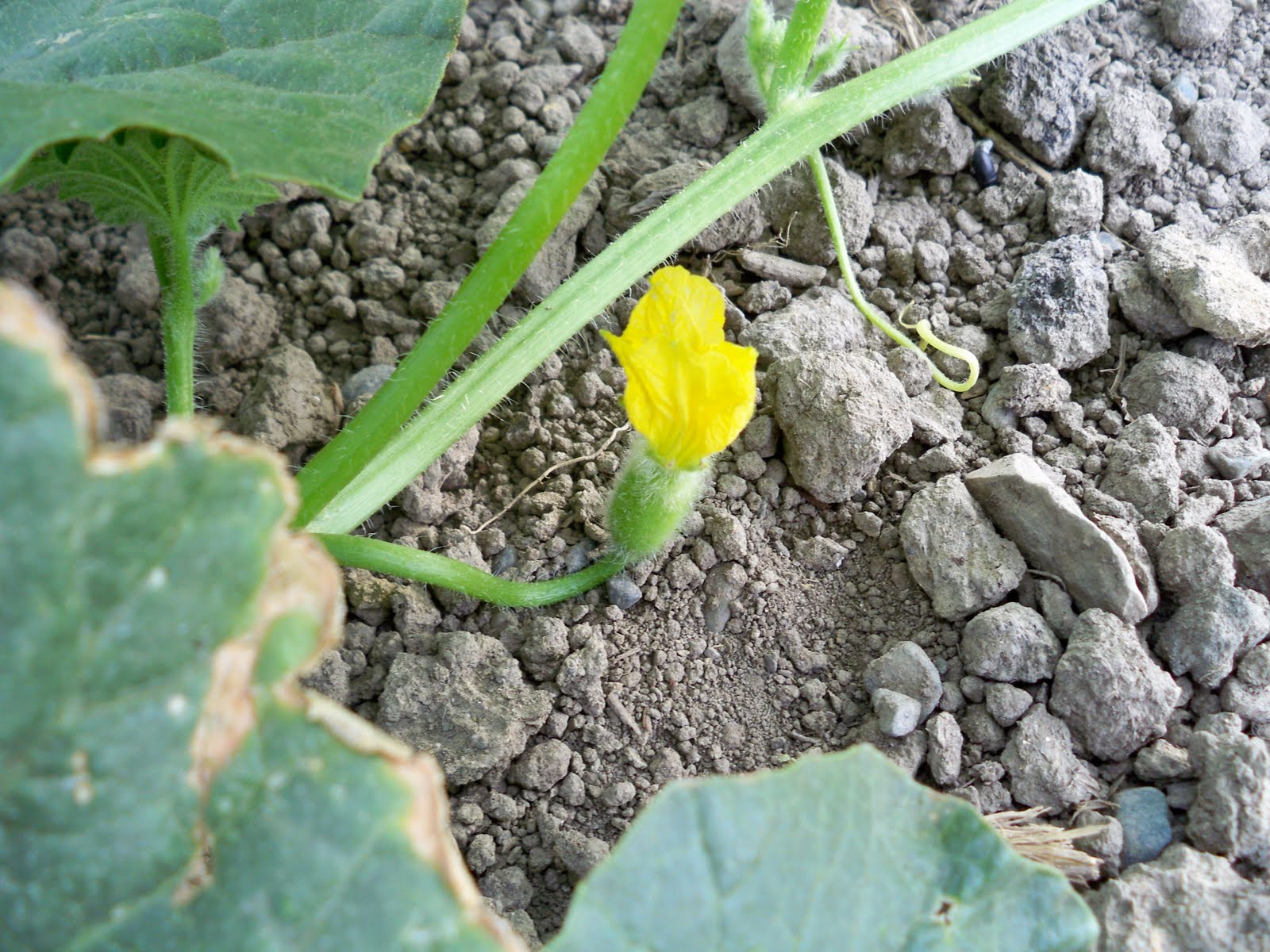
The first and fourth pictures are small melons. The first is a watermelon and the fourth is an Ambrosia melon. Melons, as well as the squash and cucumbers rely on honeybees to pollinate them. As the bees forage for nectar from the blossoms, pollen grains stick to their legs. Because they visit each blossom, male and female, eventually the pollen finds its way to the right place and the fruit will form. Even seedless watermelons need to be pollinated. They are a special type of hybrid called a triploid, which means something to those who speak genetics talk. I don't, so I'll give you the farmer version. Triploids are self-sterile and can't reproduce. There are no male flowers on their vines. Pollen from the neighboring non-seedless vines provide the needed pollen for fruit to set, but because they are self-sterile, the fruit have no seeds. I know that wasn't much of an explanation and I probably should have just said seedless watermelons are a direct result of magic. That's the depth of my understanding on what goes on in their family planning world.

Those are Yellow Finnish potatoes in the second picture. These were the result of two shovel scoops. I was pleasantly surprised to find this many and they were a very nice size. They were growing fine until about a month ago and the vines looked like they had some kind of disease. I'm a terrible "potato father" and I neglected to have a potato doctor look at them to see what might be wrong. I figured I would just wait until the vines completely died back and see how many potatoes came from them. So far, it looks very promising. I even sliced one up and fried it for dinner. The only seasoning was salt, pepper, onion and garlic. The onion and garlic were from Farmville also. The garlic was a young bulb I pulled the other day and had not formed complete cloves yet. They are pretty good this way, you just slice and dice them like an onion. Dinner was rounded out by yellow squash from Farmville and a tomato from the store. Because this year has been so cold, the Farmville tomatoes are still a good two to three weeks away from being ripe. I drifted a bit off topic there, so back to reproduction. Potatoes are one of two ways the plant reproduces. Each potato has a few "eyes", which I'm sure everyone has had sprout on them when they don't use them up right away. If you cut the potatoes into pieces with at least one "eye" on each piece, the sprout will become a plant. That's dependent on putting that piece in the ground though. That's how these potatoes were planted. I bought seed potatoes at the nursery and cut them up and planted. The above ground part of a potato plant will also form flowers that produce seeds. These seeds can be planted as well. I have never grown potatoes from "true seed" as they call it. Some day, I'll have to give it try just say I did it.

The third picture is what an ear of corn looks like in the beginning. Nothing more than a small leaf cluster. As the main stalk grows, the very top will have tassels with pollen. The pollen needs to find its way to these ears when the silks are growing from the tips of the ears. Each silk strand goes to a kernel on the ear of corn. If the pollen does not make it there, the kernel will never form. When you have an ear of corn with "blanks" instead of fully formed kernels, its due to poor pollination. Corn does not rely on the bees to move the pollen from the tassels to the ears. It relies on gravity and wind. The wind shakes the pollen loose and gravity lets it fall down to where its needed. That's the reason you shouldn't plant corn in long narrow strips. Most of the pollen will be blown off target and the ears will have a ton of "blanks". At Farmville, each of the plantings were pretty much in the shape of a square, so the ears should be perfectly formed.
Hopefully everyone learned something about how these plants try and do what everything else tries to do, make more of their kind. Guess it's a good thing Farmville hasn't moved into animal agriculture yet. I'll need some time to figure out how to tactfully describe some of those reproductive processes. I might have to apply for a "PG-13" rating when we get to that fork in the road, especially if pictures are involved. We'll worry about that later.


Monday, June 14, 2010

Pumpkins and Winter Squash

The final two rows have been planted. I know the picture has three rows, but the one in the middle will be split to make the two outside ones wider. Keeping them narrow for now helps get the water closer to the plants when they are small. The mounds you see are directly over where the seeds are planted. The soil is moist enough to sprout the seeds as long as its covered by five or six inches of dirt. The top one to two inches dries up pretty quickly so the mound over them keeps it from getting too dry. On Thursday evening, I'll rake the mounds flat and if my timing is right, the seeds will have sprouted and be emerging just underneath the original ground level. By next week at this time, they should all be up and growing. Now that the warm weather finally arrived, things get going quickly.

Pumpkins are fun to grow because they are so easy. The only thing that hurts them is powdery mildew and in most years around here, it doesn't get too bad until September and by that time I won't care if the vines die back. The sun is not too intense and very few pumpkins ever get sunburned from lack of vine cover. If any die hard pumpkin farmers are reading this, don't get offended and think I'm capping on your farming skills. But they really are pretty easy to grow. I've probably jinxed this now and all kinds of problems I never imagined will hit the pumpkins this year. We'll keep our fingers crossed. There are four varieties planted; a standard jack-o-lantern type, a small baking type; a white colored one; and a ginormous one that is supposed to get up to three hundred pounds. In this day and age, probably ninety nine percent of pumpkins grown do not end up being eaten. That's kind of sad since they grow so easy and are very nutritious. My personal favorite dish is the good old traditional pumpkin pie. We first cooked a pumpkin and used it for a pie sometime back around 1977. I still consider that the best pumpkin pie I ever had. If you do this, you'll never want to cook with canned pumpkin again. The easiest way to cook them is to cut into wedges, scrape the seeds out, put on a cookie sheet and bake until soft. After they have cooled down, scrape the flesh away from the rind and mash it up with a potato masher. Since pumpkins tend to yield quite a bit, both in size and numbers, my plan is to research other recipes to use them. I've heard they make good soup also.

The super large variety should be interesting to grow. There are many people who grow these to try and win contests for the largest pumpkin. Some of the really giant ones I've seen don't even look like pumpkins. They are more pink than orange and they don't grow in the shape of a pumpkin. They look lopsided to me. This variety I found is described as looking like a traditional pumpkin and the picture on the package looked pretty cool. We'll see how it turns out. I might have to carve them with the chainsaw and use a few pieces of firewood instead of a candle.

Winter squash are always good to plant if you think famine might be in your future. Once they are fully mature, they keep for months without deteriorating. This lack of perishability is what first roped me into growing them commercially back in the Eighties. Everything else we grew was very perishable and if they weren't harvested, packed and sold within a couple of days of peak maturity, their value dropped off the face of the cliff. These types of squash could be picked into bins and packed as sales were made. It was a great way to keep crews busy on slow sales days because they could pack ahead of time, within reason. I say within reason, because like most life lessons I've had to learn, reason can be a hard target to hit sometimes. In 1984, we planted a few acres of acorn, butternut, and spaghetti squash. Being a little too excited about the lack of perishability with these squashes, we came up with the grand idea of maximizing the efficiency of dedicating a crew to harvesting and field packing these. We put around forty people on this job and in about a week, we had over twelve thousand cases packed. We stacked them on pallets and hauled back to the main ranch. One shop was cleared out and served as warehouse for all of these. Double stacked pallets of packed squash filled this building. At this point in time, all we could see were pallets stacked up waiting for orders. For the first few weeks, it was easy money. When an order came in, just jump on a forklift and load on to the truck. Naturally things can't be this easy for too long. It turns out these squash do deteriorate, just not quickly. Not at the same rate either. We started to notice a few cases with one or two broken down squash in them. This meant we needed to unstack each pallet as we pulled them out to fill orders and check each case to make sure they were all of good quality. By the time we got to the last couple thousand cases left to sell, we had to repack into brand new boxes because some of the breakdown had damaged the box to the point of it not being usable. We were lucky the prices were not too bad that year and it still made sense to do all of this repacking. We did learn in subsequent years to be patient and keep the unpacked squash in bins and just pack a few days ahead. Not as efficient as the previous method initially, but more so in long run. For the Farmville Reality Project, there is just acorn and butternut squash planted. Acorn squash are great just baked with light seasoning. They as well as the butternut are also good baked and mashed with saltine crackers. Butternut is actually a really good substitute for pumpkin in pie recipes. Its bright orange flesh makes for better color than straight pumpkin, which can be a little pale sometimes. All in all, if you can include pumpkins and winter squash in your lineup, you will not be disappointed.

Sunday, June 6, 2010

Dawn of a New Journey...

Yes, the title does sound a bit melodramatic, but when you think about it, each new journey has a "sunrise". I feel fortunate to have spent countless sunrises outside, walking through fields of crops. No matter how many times you do this, you find yourself excited at the promise of what all of this will produce farther down the road. Being out here this morning made me realize how many things in life are journeys and they all have the promise of producing way beyond what you might imagine at the dawn of each one. You just have to keep moving forward and help everything grow at a pace that matches what each day brings. Considering how unusual each day the previous month was, this pace can be a bit elusive at times. I know some are probably wondering where this post was going and how it relates to the project. It relates to many things, this project being one of those things. The other things are potential material for another blog somewhere down the road. Being out early on a morning such as this is the perfect time to contemplate it all though.

It's been almost two weeks since the last update and if this were any other year, I would be describing growth of the various crops using terms like "amazing". But this is 2010, and in our area, May came and went without topping the ninety degree mark. That is not the usual scenario most years. We even had greater than normal rainfall with all of the limited sunshine that comes with those condidtions. Needless to say, everything is a little bit behind schedule.

The pictures in this post were taken this morning. It really doesn't capture just how things look early in the morning when the sun has only been up a short time. I get the benefit of this view with a cup of coffee in my hand because it's less than thirty steps out my back door. The angle of light is very low so the plants have a certain "glow" about them that only happens at that time. Later in the day, the light is more directly up above and the leaves appear more solid in color. Later, at sunset, the angle is again low, but usually the light appears to have more shadows than in the morning, and the "glow" is spotty at best. When we would check fields in the morning to assess how they were progressing, if we came across one with no "glow", that was a trigger to actually get out of the truck and look a little closer. I realize you're supposed to get out of the truck anyway, but sometimes you get busy and have to cut corners. When a field full of plants lacks the "glow" early in the morning, it means the leaves are limp and possibly unhealthy. It could mean the field is too dry or there may be pest or disease pressures keeping the plants from being at their best at this time of day. At any rate, if they look awful in the morning, when afternoon hits, it doesn't get better. That's why you get out and have a closer look to see what you need to do and if the situation means shifting priorities for the daily work schedule, that's what would happen. Lucky for the Farmville Reality Project, the scale allows me to stay right on top of this and, so far, everything has the "glow" when I check it each morning.

You may not be able to tell from the picture, but the sweet corn has three different planting dates spaced two weeks apart between each one. The taller ones have been suckered, which means the suckers that grow up from the base of the plant have been removed. This helps keep the water and nutrient flow maximized from the roots up to the main stalk, where the ears are formed. If you let the suckers grow unchecked, the ears on the main stalk might be smaller than they should because too many parts of the plant are competing with a root system that can only do so much. The perfect situation with this level of attention is to get two ears from each plant. I haven't yet counted how many plants are in each of the plantings (I know there are a few of you who think I'm not being truthful right now), I'll just accept however many ears of corn we end up getting out of this. One thing I know, they will all taste great.

Regarding the picture of the row of melons, they look pretty small and they are. However, they are on the brink of really taking off. All we need is a few hot days and me to not forget to keep them watered. Because of the fairly cool weather, their leaves are small. They are at the five to six leaf stage, which means the runners for the vines are beginning to form. It's just that the leaves being small, they are very compact compared to what they should look like. If this week brings us some more normal temperatures, then the next update will show this area covered in vines and maybe even small flowers that will become the melons.

All in all, June is shaping up to be a pretty good month for the Farmville Reality Project. It has been interesting though. Truth be told, probably the single most interesting month in my "too many years to count" life, but in a good way. Somehow, that will make everything I harvest even that much better.